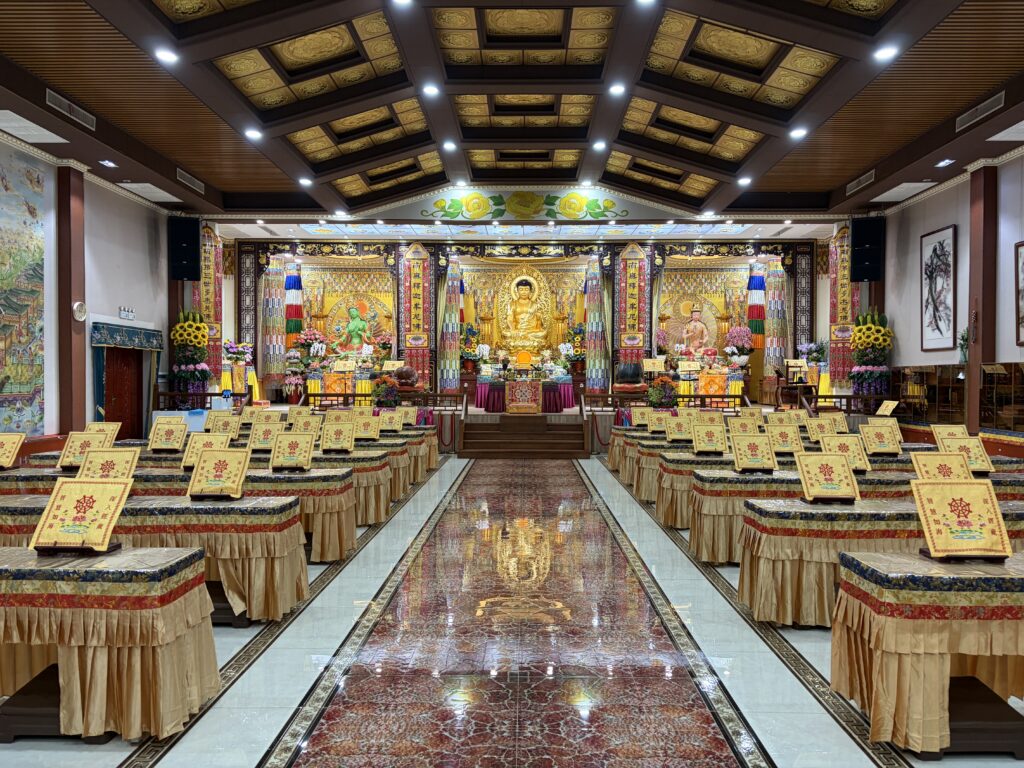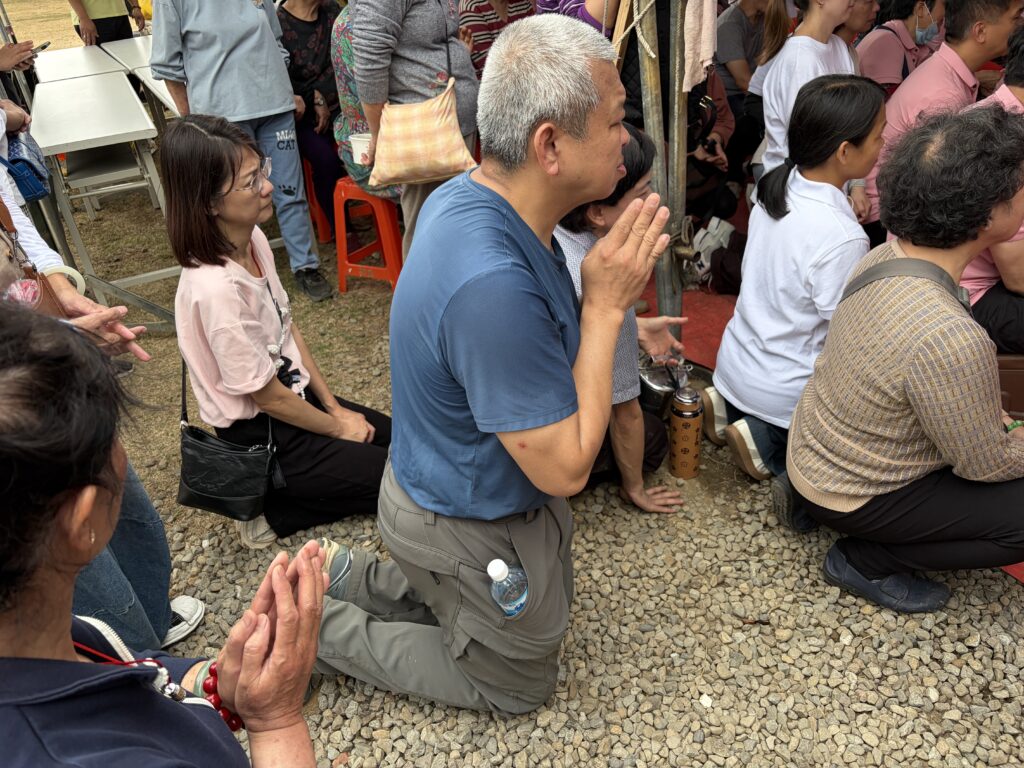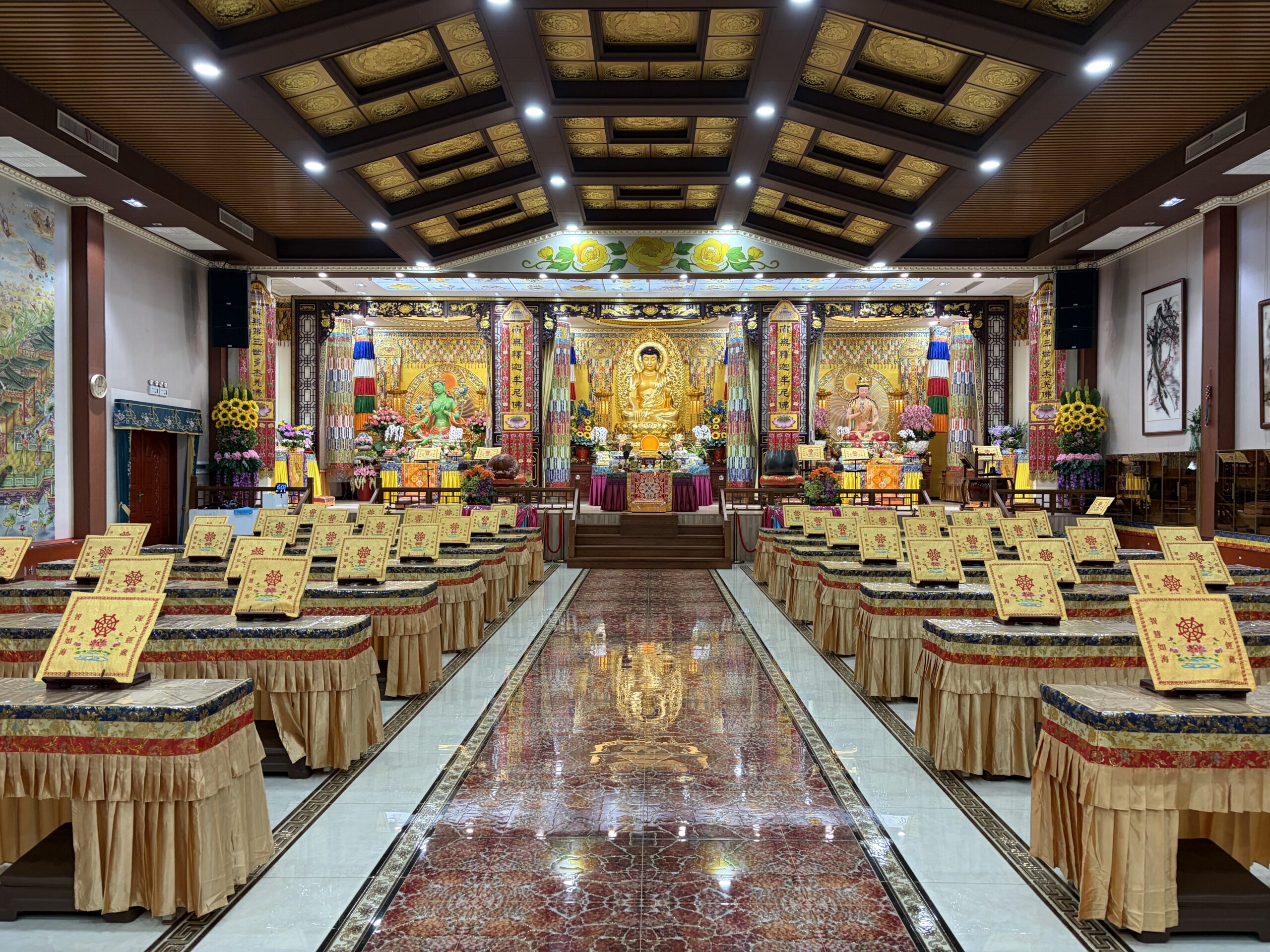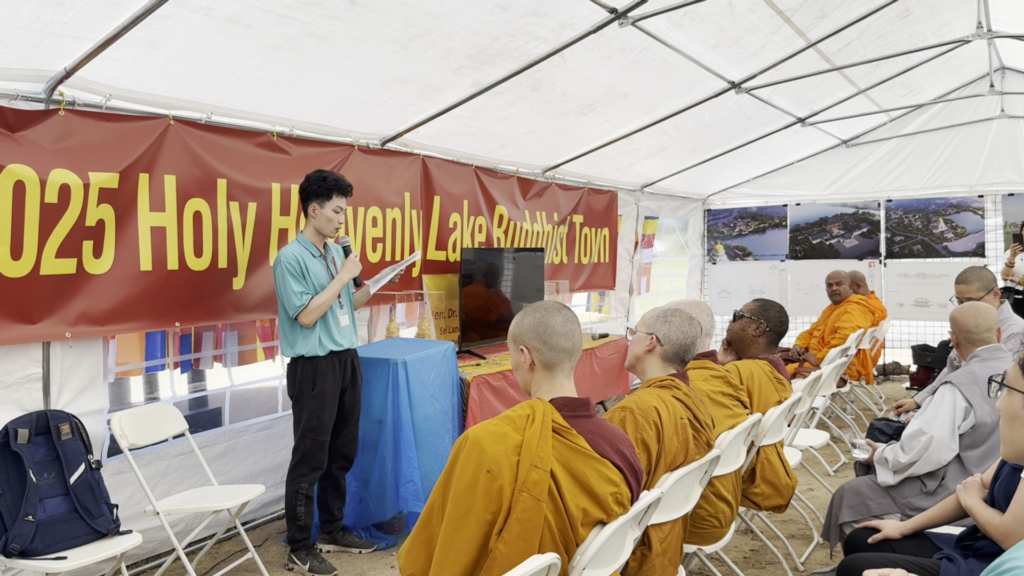
I made this presentation at Holy Heavenly Lake Buddhist Town on June 4th 2025. (I cut out the Chinese parts in the front and end.)
The topic I’d like to share is, “My experience with division and my wrongdoings.”
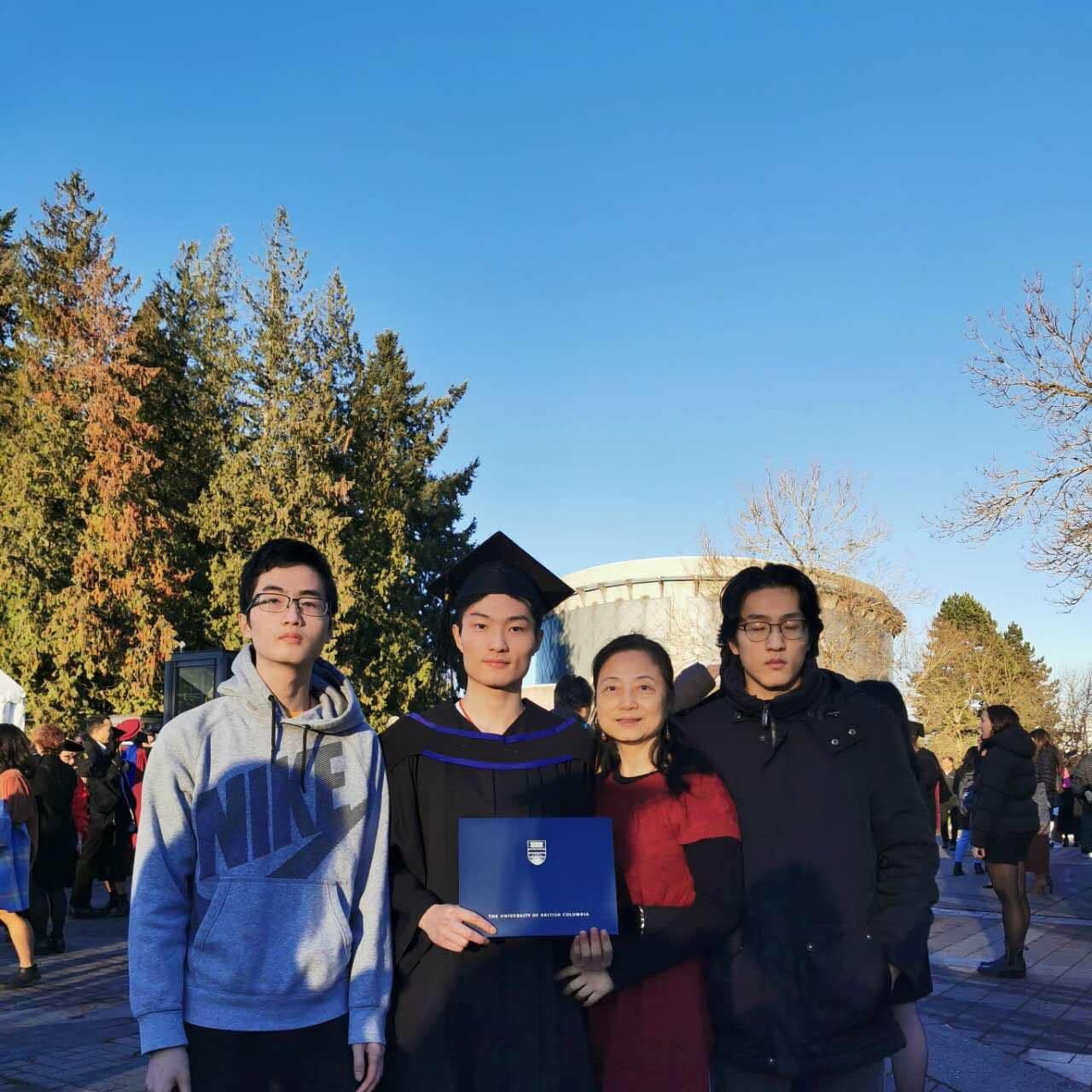
My name is Liri Zou. Dharma name is also 力瑞. I’m a disciple of H.H. Dorje Chang Buddha III. I was born in Chengdu, China, in 2001 and moved to Canada when I was 9 months old. I grew up in Vancouver, Canada, and studied Bachelors of International Economics at UBC. I’m a Buddhist disciple at a group called 加拿大學佛院.
I was very fortunate to start learning the Buddha Dharma at a young age. We were introduced to the Buddha Dharma of Namo Dorje Chang Buddha III and Namo Shakyamuni Buddha in 2011. On August 7th, 2013, my parents, two younger brothers, many others, and I took refuge in Namo Dorje Chang Buddha III as our Buddha Master.
Since my brothers and I began learning the Buddha Dharma, we’ve been attending the 加拿大學佛院 group study almost every Friday night. Although how it was organized changed over time, more or less we’d listen to the Dharma discourse of H.H. Dorje Chang Buddha III and then play games as kids.
We formed a seven kid friend group around 2014. Our parents used to call us by the nickname “Seven Little Dwarfs.” We spent a lot of time together, sharing similar interests like video games, trading card games, and sports. We also learned singing, dancing, and the violin together. Along the way, I made many mistakes. Because I was the oldest amongst the bunch I developed an ego around them. I’d always try to be the best at the game whether it’s Honor of Kings, 三国杀, Pokemon cards, or soccer. I was very competitive. Alongside this competitiveness I also harbored envy and a desire to be the leader and center of attention. I don’t mean that becoming a leader is bad; rather, my motive, my goal of becoming the leader was wrong. There’s another boy that was the second tallest and second oldest. We started forming two factions. We even created our own pose for our group. I’d be jealous when one of so-called “my members” went to play with the other group or talked to them too much. When we played games it would be my team versus his team. This faction mentality stemmed from my competitive and jealous mindset, which, in turn, fueled more anger, hatred, jealousy, and envy, creating a vicious cycle. For example, if Person A spoke to Person B, I would feel envious and try to steal Person A or B away or think of ways to break them up. Thoughts like, “I can’t let him be better than me at this,” and, “I need so-and-so to see that I’m good,” motivated me to become better at things we did together. It wasn’t about all of us improving together, rather, I just wanted to be a step ahead of everyone else. There were all kinds of selfish wrongdoings, hurting others, and evil thinking.
This silly game that I partook in only started fading after we all grew up. I think it was when I was around grade 10. I wish I’d never planted such bad causes, but I’m also very thankful for this experience, because I’d rather mess up at a young age and learn from it than to mess up when I’m older with more serious consequences and understand the lesson later. I firmly believe that without this experience to reflect on, I wouldn’t have truly understood the causes and harm of division that my Buddha Master warned us to avoid and realize. It’s unsettling to think that I possess so many of the traits that could lead to creating division. In Buddhism, there are many sects and schools, and a recurring issue is how people—those who are not true cultivators—slander or harm others. This division, filled with hatred and jealousy, distracts us from the goal of performing good deeds and propagating the Buddha Dharma. This tendency of division, which comes from attachment to self, is an obstacle to our path of cultivation (修行道路上的障碍). Let’s not even talk about such broad settings; this issue occurs even within smaller Buddhist organizations. This problem is not limited to religious contexts but also extends to everyday settings, such as the workplace, school, and friend groups, where similar conflicts arise. What His Holiness Namo Dorje Chang Buddha III taught me about why we should and how to avoid such wrongdoings, hit me very hard.
My Buddha Master’s Dharma discourses not only contain the absolute truth but are also filled with compassion and how to cultivate. Simply put, it gives insight to how the Buddhas and Bodhisattvas act, speak, and think. H.H. Dorje Chang Buddha III leads by example, showing us how to become someone with virtue, how to become a Bodhisattva at the causal stage (因地菩萨), how to obtain liberation from the cycle of reincarnation (了生脱死). I highly suggest listening to Pengzhi Qi’s exclusive interview to understand just a glimpse of what it’s like to be with my Buddha Master. When I listen to H.H. Dorje Chang Buddha III’s Dharma discourses there is a blessing that makes me want to better myself.
I’ve improved compared to when I was a kid, but I still have moments of schadenfreude. Sometimes I feel a sense of relief when someone fails. It’s as if I can’t stand seeing others succeed (见不得别人好似的) and become better than me, especially those who share the same environment as me, those I know. This feeling pops out from time to time. For example, if my friends complain about their stocks dropping, I might feel this way. The same happens when someone that I hold a grudge against loses face. I don’t think the exact words of “they deserve this” but that’s just exactly what I’m feeling. If their failure is too severe, I don’t feel this way. These feelings also don’t arise when I’m already doing better than them or when I perceive them as a good Buddhist. All that being said, I still haven’t gotten rid of self-attachment. A true cultivator wouldn’t hold a grudge against anyone, let alone take pleasure in someone’s misfortune.
I recognize that I am prone to arrogance (骄傲心理). Thoughts that lead to arrogance and arrogant thoughts frequently arise. I find myself fantasizing. Recently when I met new Dharma sisters, the comparison of status and authority suddenly came to mind. It’s as if I’m comforting myself saying “oh it’s okay I’m doing better there’s nothing to envy here.” In many cases, after sharing with others what I’ve done or hints that reveal my so-called “position,” the idea of others knowing or finding out about my accomplishments or good side evoke my satisfaction. I’m drawn to these thoughts because I like it. This “I” is the consciousness of an ordinary person (凡夫意识).
This mentality goes completely against the teachings of Namo Dorje Chang Buddha III. I have failed to truly uphold the Four Limitless States of Mind, not to mention the Dharma of Great Compassion for All Living Beings as My Mother Bodhicitta and the Dharma of Bodhisattva Correspondence Bodhicitta. I am far from a true cultivator.
A month ago (end of April in 2025), I listened to a Dharma discourse regarding people’s conflicts—people being jealous and hating each other. Some can’t even interact with others, some won’t even talk to each other. It made me think again about how conflicts can arise over time after close interactions with certain people, even when, initially, the type of conflict or the person involved seemed impossible or unlikely. I also thought about the Accountability Partner Project in the The Karmic Affinity Collective (KAC) program that my brothers and I are currently participating in. If everyone sincerely participated and followed the guidelines of this project or a similar activity, we could resolve and prevent so many conflicts. How wonderful that would be! I thought to myself—this Accountability Partner Project really is a solution to division.
Life is very short. Karmic conditions matured for us all to meet, otherwise we won’t be here today together if not for our karmic connection from beginningless time (无始的因缘). If not for this karmic connection we wouldn’t be here together. Everything is cause and effect. Even a hair falling out is a bad retribution. Even a cool breeze is a good retribution. What we make of our current situation, good or bad, is dependent on ourselves. We can either continue walking down the cycle of reincarnation or free ourselves from the pains of self-attachment. From the beginningless time we are family. This is my interpretation. There will be mistakes. Amitabha. 🙏
I posted this earlier on r/DorjeChangBuddhaIII__ as well.
The beginning is very similar to What is the story of your life and your journey into Buddhism?, a talk I made a few months back during the first KAC project 2 session where everyone had to share 15 minutes on the topic of our journey into Buddhism. This reflection was inspired by the previous one.